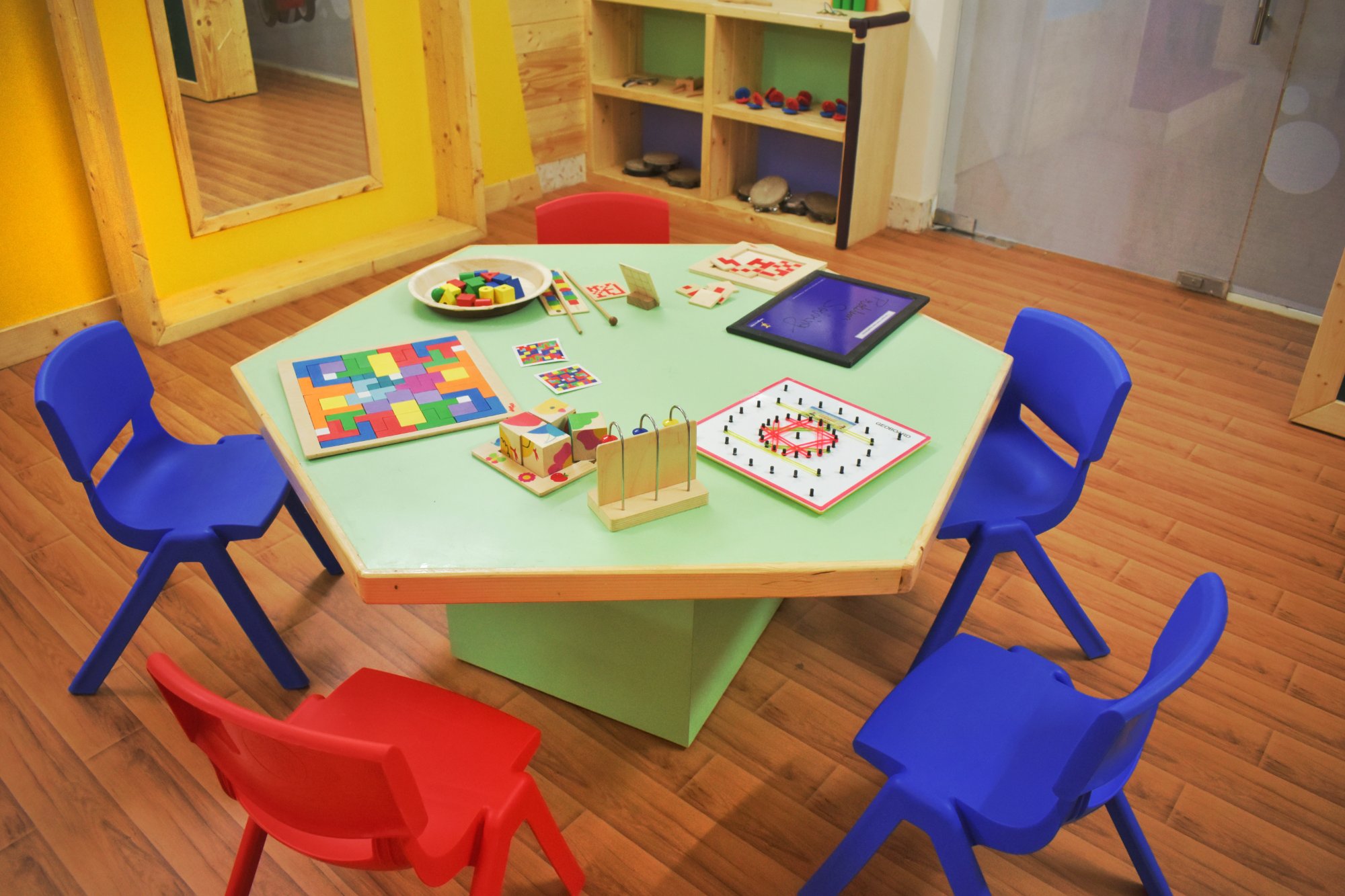
Tour a few preschools and you will quickly collect a pile of curriculum names — play-based, Montessori, theme-based, inquiry-led, academic-readiness. Each school describes its own as the best. For a parent, it can feel like being handed a menu in a language you do not speak.
Here is a plain-language guide to the main preschool curriculum approaches, what each actually looks like inside a classroom, and how to find the right fit for the child you have.
1. Play-Based Curriculum
The most widely recommended approach for young children, and the one backed most strongly by modern research. Learning happens through purposeful, guided play — phonics through games, maths through real objects, language through stories and role-play.
In the classroom: activity stations, pretend-play corners, sensory tables, lots of movement. It looks joyful and busy. Every activity has a developmental goal, even when it simply looks like "playing".
Best for: most children — it suits how young brains naturally learn.
2. Montessori-Inspired
Based on the work of Dr Maria Montessori, this approach emphasises child-led discovery with carefully designed, self-correcting materials. Children choose their own work and progress at their own pace.
In the classroom: calm, orderly spaces; specialised wooden materials; mixed-age groups; long uninterrupted work periods.
Best for: children who enjoy independence, focus and order. Note that "Montessori" is not a protected term — quality varies widely, so observe carefully.
3. Theme-Based Curriculum
Learning is organised around themes — seasons, community helpers, animals, festivals. Every activity for a week or two connects to that theme, weaving language, maths, art and discovery together.
In the classroom: changing displays, theme-linked stories and crafts, projects that build over days.
Best for: children who thrive on connection and context; it makes learning feel like a story.
4. Academic-Readiness Curriculum
A more structured, formal approach that introduces reading, writing and numbers earlier, often with worksheets.
A word of caution: research consistently shows that pushing formal academics too early can produce a short-term advantage that fades — and sometimes a long-term reluctance to learn. For children under six, heavy worksheet drilling is rarely the right primary approach.
The Approaches at a Glance
| Approach | Core Idea |
|---|---|
| Play-Based | Learning through guided, purposeful play |
| Montessori | Child-led discovery with structured materials |
| Theme-Based | Learning organised around connected themes |
| Academic-Readiness | Early, formal literacy and numeracy |
A curriculum is just a map. What truly changes a child is the warm, skilled teacher walking them through it. The label on the door matters far less than the people inside.
The Best Programmes Blend the Strengths
In practice, the strongest early-years programmes are not rigidly one type. They combine the joy and brain-science of play-based learning, the independence of a Montessori-inspired environment, and the rich context of themes — all delivered by well-trained teachers who adapt to each individual child.
That is the philosophy behind the Kangaroo Kids iCan Curriculum: play-led and hands-on, with clear developmental goals, refined over three decades of real classrooms.
How to Choose
Do not choose a curriculum from a brochure. Visit, watch a working classroom, and ask the school to explain their approach in plain words with a sample weekly plan. Then watch your own child — children gravitate quickly toward the environment that suits them. Their reaction tells you more than any label.
The Bottom Line
There is no single "best" curriculum — only the best fit for your child, delivered by teachers who genuinely care. Understand the approaches, visit in person, and trust what you see. The right environment will feel warm, purposeful and joyful all at once.
See Our Curriculum in Action
Book a free tour of Kangaroo Kids Yelahanka and watch how the iCan Curriculum brings play-based learning to life.
Book a Free Tour