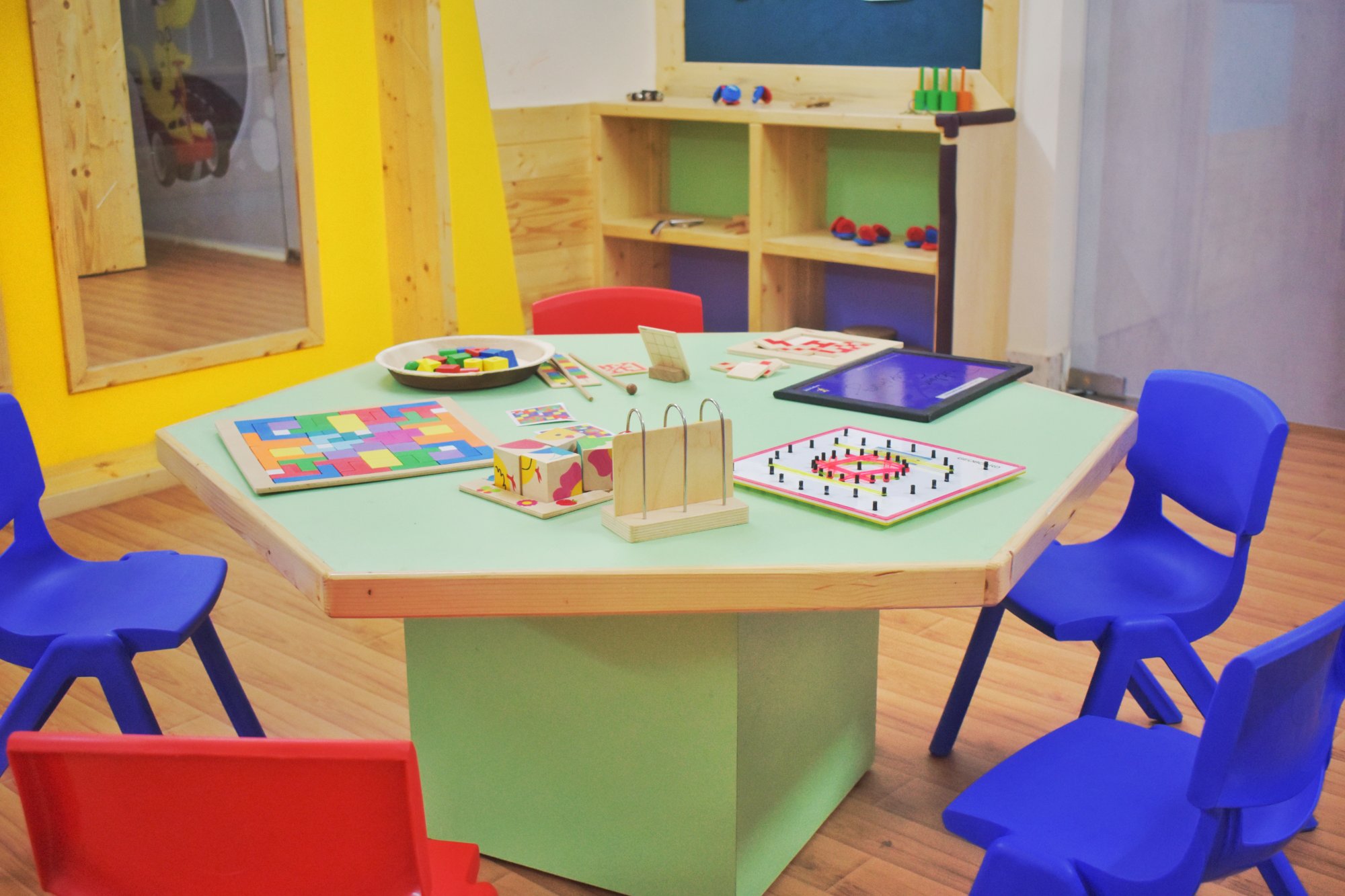
Walk into a Kangaroo Kids classroom on any given morning and you might wonder where the "learning" is happening. A group of three-year-olds is building a tower of blocks. Two children are pouring water between cups at a sensory table. Another is dressing up as a doctor and "examining" a teddy bear. It looks like pure play — and that is exactly the point.
For children under six, play is not a break from learning. Play is how learning happens. This isn't a feel-good slogan; it is one of the most consistent findings in child development research over the last fifty years.
What "Play-Based Learning" Actually Means
Play-based learning is often misunderstood as letting children do whatever they want all day. It is not. Genuine play-based education is carefully designed. Teachers set up the environment, choose materials with intention, observe closely, and gently extend each child's thinking through questions and new challenges.
The child still feels they are simply playing — and that feeling of freedom and joy is what makes the learning stick.
The Two Kinds of Play in a Good Classroom
| Type of Play | Who Leads | What It Builds |
|---|---|---|
| Free Play | The child | Creativity, decision-making, independence, social negotiation |
| Guided Play | Teacher sets up, child explores | Early literacy, numeracy, problem-solving, focused attention |
A strong preschool weaves both through the day. Too much free play and children miss structured skill-building. Too much teacher-direction and children lose the curiosity and ownership that make early learning powerful.
Why Play Works So Well for Young Brains
1. It builds the brain's foundation
In the first six years, a child's brain forms more than a million neural connections every second. Play — especially active, hands-on, social play — is the richest possible input for this wiring. When a child stacks blocks and watches them fall, they are running real experiments in gravity, balance and cause-and-effect.
2. It develops "executive function" skills
Executive function — the ability to focus, remember instructions, control impulses and juggle tasks — predicts school success better than IQ. Pretend play is one of the best workouts for it. A child playing "shopkeeper" must hold a role in mind, follow social rules, and adapt as the game changes.
3. It makes language explode
Children use far more complex language when playing than when answering worksheet questions. Negotiating roles ("You be the patient, I'll be the doctor"), narrating their actions, and resolving small conflicts all stretch vocabulary and grammar naturally.
4. It teaches emotional regulation
When a tower collapses or a friend takes a toy, the child feels frustration in a safe, low-stakes setting — and, with a teacher nearby, learns to manage it. These are the roots of resilience.
Research from Harvard's Center on the Developing Child confirms it: the skills that matter most for lifelong success — focus, self-control, curiosity, persistence — are built through rich, responsive play, not through early academic drilling.
But Will My Child Be "Behind" Academically?
This is the question we hear most from parents, and it deserves an honest answer. Studies that follow children for years tell a clear story: children from heavily academic preschools often show an early reading advantage that disappears by age seven or eight. Meanwhile, children from play-based programmes tend to show stronger motivation, better social skills and, frequently, better long-term academic outcomes.
In other words, pushing formal academics too early can produce a short-term gain and a long-term loss. Play-based learning builds slower-looking but deeper roots.
How Kangaroo Kids Brings This to Life
Our iCan Curriculum is built entirely around purposeful play. A single morning might include:
- A sand tray hiding plastic letters — children "dig for sounds" and build words
- A pretend vegetable market where children weigh, count and "pay" — early maths in disguise
- Story dramatisation where children act out a tale, building sequencing and comprehension
- Open-ended art with no "right" outcome, building confidence and fine motor control
Every activity has a clear developmental goal. The child simply experiences a joyful, busy, curious morning — and goes home having grown.
The Bottom Line
Childhood is short. The years before six are the single greatest window for building a curious, confident, capable human being. Play-based learning honours how young children are actually built to learn — and the evidence shows it works.
When you choose a preschool, do not be impressed by toddlers reciting facts. Be impressed by children who are deeply absorbed, asking questions, solving problems and laughing. That is what real learning looks like at this age.
See Play-Based Learning in Action
Book a free school tour and watch how our classrooms turn everyday play into powerful learning.
Book a Free Tour